
Processing a quotation request for a power semiconductor is significantly easier when, in addition to the manufacturer and complete part number, the available documentation, required quantity, and key application conditions are also provided. This is particularly important for older, discontinued, difficult-to-identify, or previously sourced IGBTs, IGCTs, thyristors, power diodes, and modules from another manufacturer. Providing the relevant information does not by itself guarantee accurate component identification or interchangeability, but it reduces the risk of misunderstandings and provides a basis for commercial and, where necessary, technical clarification.
Quick answer: What should a quotation request include?
Where possible, provide the original manufacturer, the complete and exact part number, the required quantity, the desired delivery time, and the component datasheet or clear photographs. If a technical evaluation of a replacement component is also required, provide information about the application, switching topology, electrical load, switching frequency, cooling conditions, and mechanical constraints.
1. The original manufacturer and complete part number are the starting point
The most important identifier in a quotation request is the complete manufacturer part number shown on the component or in the original documentation. A single different character, hyphen, suffix, or revision code may indicate a different voltage class, current rating, switching configuration, package, or technology generation.
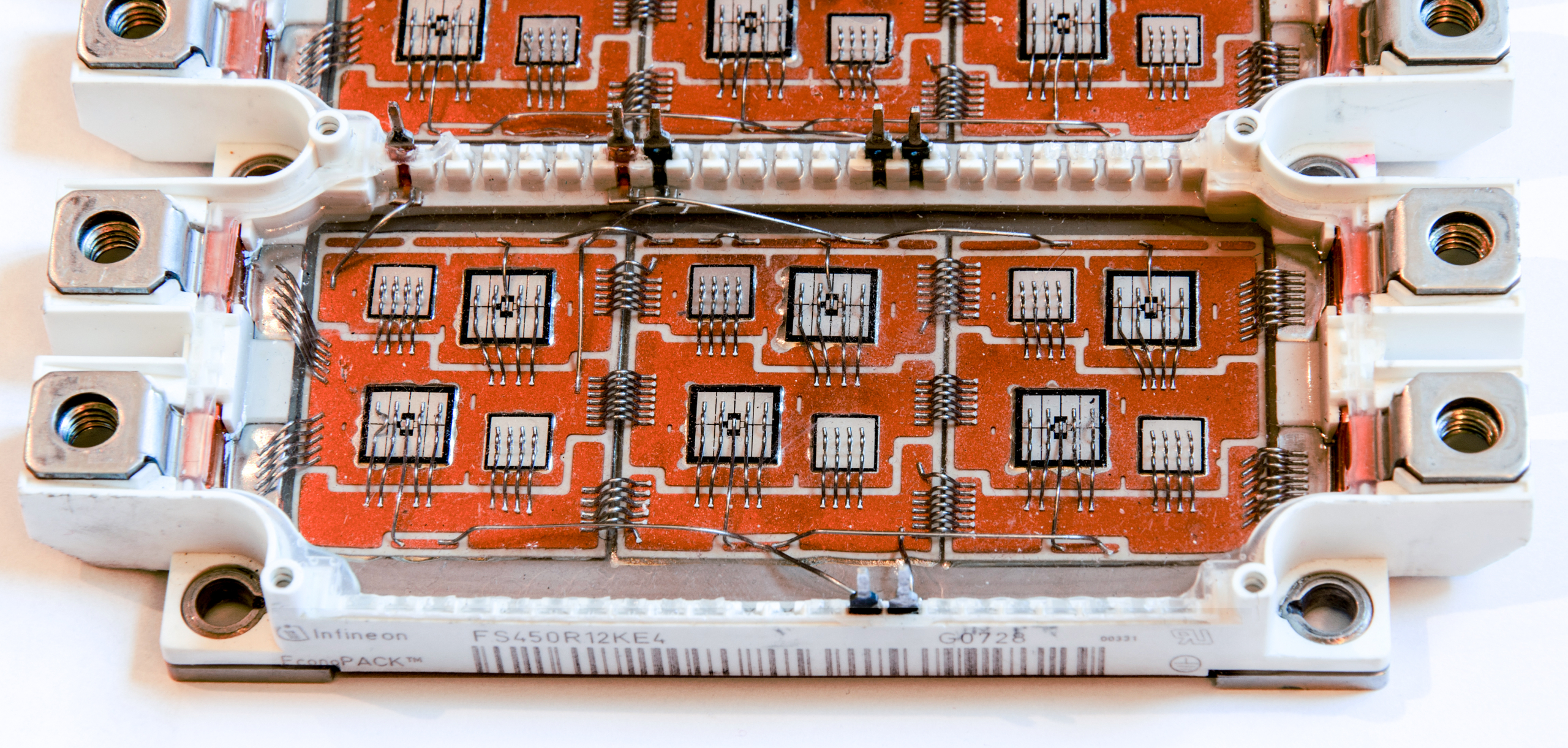
Do not provide only the easily readable numeric sequence. Record the complete marking, including any manufacturer prefixes and suffixes. If the marking is damaged or uncertain, it is advisable to attach photographs taken from multiple angles under suitable lighting. The photographs should show both the complete component and its markings as clearly as possible.
The manufacturer is also important because similar number sequences may identify different products from different manufacturers. If the manufacturer cannot be identified with certainty, state this explicitly rather than adding an assumed brand name.
2. What commercial information should you provide?
In addition to technical identification, commercial information is also required to prepare a quotation. The required quantity may affect available sourcing options, packaging, and pricing. Providing the desired delivery time helps distinguish an urgent maintenance requirement from planned stock replenishment or project procurement.
- Original manufacturer and complete part number; if uncertain, the complete readable marking.
- Required quantity, including an indication of whether the requirement is a one-time or potentially recurring demand.
- Desired delivery time or planned date of use.
- Shipping country and, where relevant, a brief description of the project or end-use area.
- Required documentation, such as the manufacturer datasheet, compliance documentation, or test report.
If the item has been purchased previously, the previous order number, supplier, quotation number, or internal part number may also help retrieve the relevant history. However, these should not replace the manufacturer part number.
3. Datasheet, label photographs, and dimensional drawings
The original manufacturer datasheet is one of the most useful attachments, particularly for discontinued or older components. The datasheet can be used to verify the technology, nominal and limit ratings, switching configuration, package, connections, thermal data, and measurement conditions.
It is important to distinguish between maximum, minimum, and typical values. A typical value is not automatically a guaranteed limit. When interpreting the data, the test conditions and the specified junction, case, or ambient temperature must also be taken into account.
If no datasheet is available, photographs of the component, label, original packaging, and installation environment can be provided. Mechanical dimensions alone do not prove compatibility, but they can help rule out obviously different packages.
4. Technical data for new component selection or replacement evaluation
| Data category | What should be provided? | Why is it important? |
|---|---|---|
| Component type | IGBT, IGCT, thyristor, diode, MOSFET, module, or press-pack | Determines the technology and documentation to be evaluated. |
| Switching topology | Single switch, half-bridge, full bridge, chopper, rectifier, or other configuration | Different internal circuit configurations may exist within the same package. |
| Voltage and current | Nominal, operating, peak, and overload values, including the relevant conditions | The nominal rating alone does not describe the actual electrical stress. |
| Switching conditions | Switching frequency, control method, and type of load | The ratio of switching and conduction losses varies by application. |
| Cooling | Heatsink, air or liquid cooling, and available thermal data | The allowable semiconductor loading is closely related to the thermal system. |
| Mechanical design | External dimensions, mounting-hole pattern, connections, mounting and insulation constraints | A product that appears electrically suitable may still be mechanically unsuitable. |
| Environmental conditions | Ambient temperature, vibration, contamination, humidity, and application area | The operating environment can affect component selection and service life. |
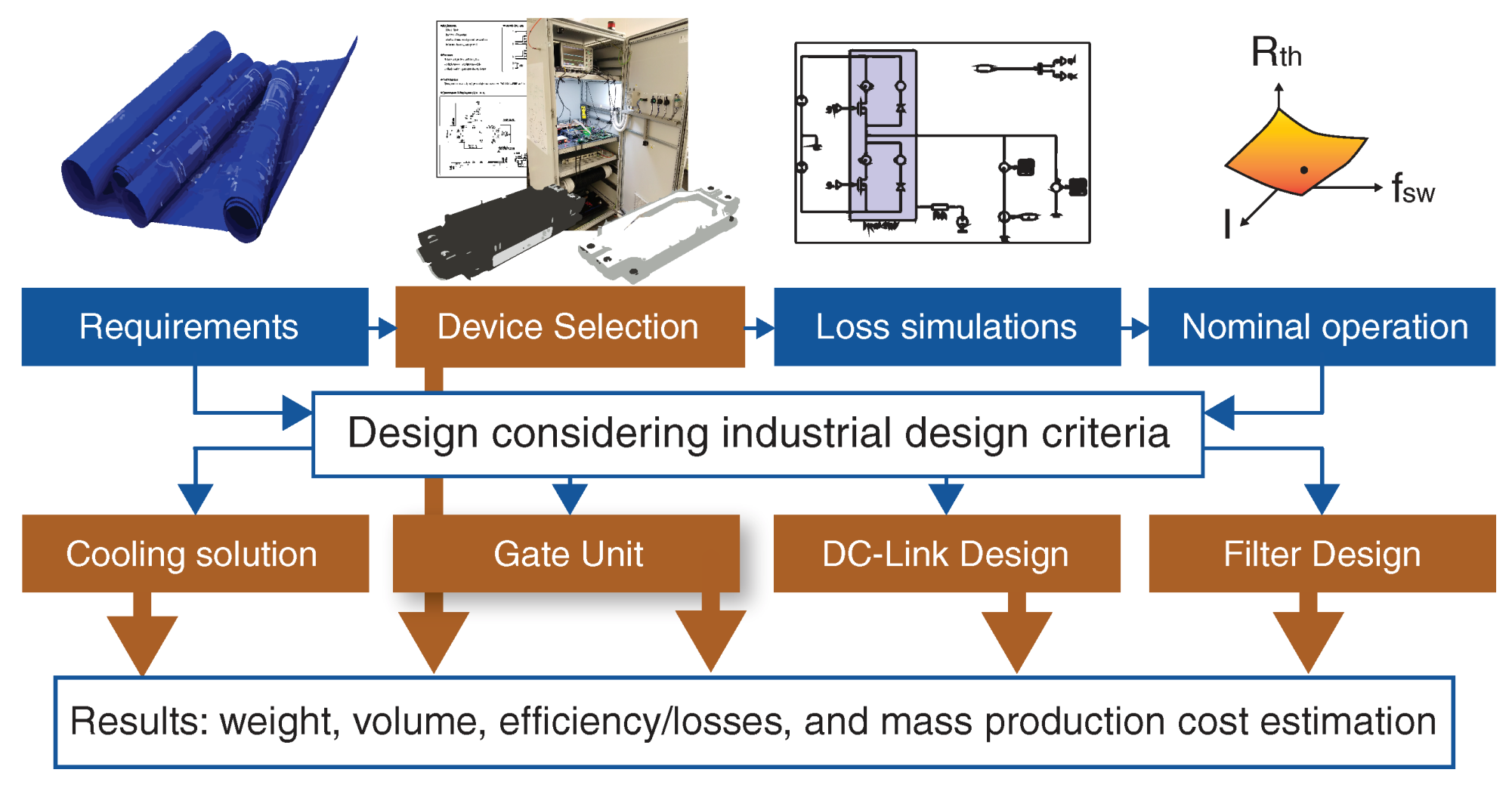
Manufacturer selection guides also combine multiple criteria. For IGBTs, for example, product selection may take into account not only the voltage range, but also the switching frequency, application topology, diode, and switching behavior.
5. Why are current, voltage, and package not enough?
Two power semiconductors with the same nominal voltage and current ratings may still differ in switching losses, on-state voltage drop, diode characteristics, gate-drive requirements, short-circuit behavior, thermal resistance, or allowable temperature.
For modules, external dimensions alone do not prove that the internal topology, terminal configuration, or insulation design are identical. For press-pack components, the required clamping force and cooling arrangement are also part of the overall system, in addition to the mechanical dimensions. Evaluating these factors is an application-specific technical task.
6. Discontinued or difficult-to-source components
For a discontinued product, it is advisable to attach the original datasheet, any manufacturer product change notification, and any document concerning the end of the product lifecycle, if available. Photographs of the original component from multiple angles and relevant sections of the equipment documentation may also be useful.
Evaluating an alternative is not the same as generating an automatic replacement list. The exact function of the original component should first be established, followed by the electrical, thermal, mechanical, and control requirements. Direct comparison of parameters from unknown sources or based on different measurement conditions can be misleading.
7. What should not be stated as certain in a quotation request?
If a piece of information has not been verified, it should be clearly identified as uncertain. Do not describe a component as compatible simply because it physically fits in the same location as the original. Terms such as “similar,” “replacement,” or “drop-in replacement” should only be used after an appropriate technical evaluation.
A photograph can often help identify a component category or likely package, but the exact type and its electrical characteristics cannot always be confirmed from a photograph alone. If the marking is illegible, the original documentation and equipment data are therefore particularly important.
Important: Selecting the appropriate component always requires a technical evaluation of the specific application and operating conditions.
Conclusion
A well-prepared quotation request for a power semiconductor combines three layers of information: accurate product identification, the commercial requirement, and the technical conditions of the application. For a known and unchanged part number, it may often be sufficient to provide the manufacturer, complete part number, required quantity, and desired delivery deadline. For an older, discontinued, or alternative component requiring evaluation, however, a datasheet, photographs, switching topology, and information about the load, cooling, and mechanical design may also be required. The purpose of requesting more detailed information is not to make the process unnecessarily complicated, but to reduce the risk of incorrect identification and an unsuitable quotation.
Frequently Asked Questions
Is it enough to send only the part number?
For an active product that can be clearly identified, the complete manufacturer part number, required quantity, and desired delivery deadline may provide a suitable starting point. For older components, components with incomplete markings, or parts requiring replacement evaluation, additional documentation and application data may also be required.
Can I request a quotation based on a photograph?
A photograph can be attached and may help with preliminary identification. Where possible, the photograph should show the complete component, all available markings, the connection side, and the original packaging if available. However, a photograph alone is not always sufficient to confirm the exact type or compatibility.
Why is the switching frequency required?
The switching frequency affects the significance of switching losses. Two semiconductors with the same nominal current and voltage ratings may behave differently at different switching frequencies, which makes switching frequency an important application parameter when selecting a new component or evaluating an alternative.
Can modules with the same dimensions be interchanged?
Not necessarily. Modules with the same or similar housing may differ in internal topology, terminal configuration, insulation design, chip technology, thermal performance, and drive requirements. Mechanical similarity alone does not confirm compatibility.
What should I send for a discontinued component?
Where possible, provide the original manufacturer and part number, and attach the datasheet, any product change or lifecycle documentation, photographs, and information about the required quantity, deadline, and the most important technical constraints of the application. This information helps prepare the technical evaluation of an alternative component.
Do you need a quotation for a power semiconductor?
Send us the available product information and documentation. The more clearly the component and requirement can be identified, the less supplementary clarification may be required during quotation preparation.
For the initial enquiry, please prepare where possible:
- the original manufacturer and complete part number;
- the required quantity and requested delivery date;
- the datasheet or clear product and label photographs;
- a short description of the application and operating conditions if an alternative is to be evaluated.
For other enquiries, please visit the Budaker contact page.
Sources
Infineon Technologies: IGBT Modules. Product portfolio, applications and technical selection considerations. Accessed 21 September 2026.
Fuji Electric: Power Semiconductors – Design Support – Application Manuals. Application manuals for IGBT, IPM, SiC and discrete power semiconductor products. Accessed 21 September 2026.
Semikron Danfoss: Power Cycle Model for IGBT Product Lines, AN 21-001, Revision 02, 23 July 2024. Thermal cycling, lifetime models and failure mechanisms.
Semikron Danfoss: Thyristor Triggering and Protection of Diodes and Thyristors, AN 18-002, Revision 03, 11 November 2024. Triggering, voltage protection and overcurrent considerations.
Mitsubishi Electric: Power Devices Application Notes. Official application documentation for power semiconductor devices. Accessed 21 September 2026.