
What is a tactile switch?
A Tactile Switch is a compact switch that operates using a metal dome mechanism. When the button is pressed, the metal dome collapses and creates an electrical connection, allowing a low current to pass through the circuit. At the same time, it provides a clear tactile feedback, helping users recognize that the input has been successfully activated. Once the pressure is released, the dome returns to its original shape and the circuit is disconnected.
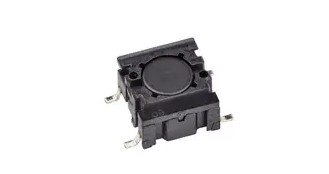
Key features of tactile switch:
Clear tactile feedback for precise user operation
Short travel and low actuation force for fast response
Low current switch capability
Multiple actuator shapes, sizes, and mounting options
Long mechanical life and high durability
Optional illuminated and sealed versions for specialized applications
Suitable for consumer electronics, industrial equipment, and control panels
What is a detector switch?
Detector Switches are compact switches specifically designed to detect the presence, position, or movement of an object. The basic working principle of a detector switch involves the mechanical movement of components inside the switch in response to an external stimulus. They detect changes in mechanical state and output a clear electrical signal.
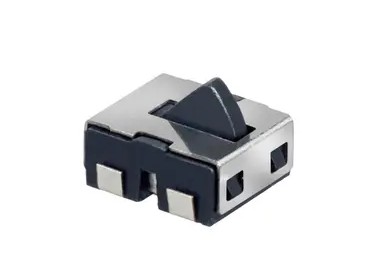
Key features of detector switch:
Focused on detection rather than power switching
Excellent for position and status monitoring
Compact and sensitive
Usually provide a simple signal output
Various actuator designs for different detection needs
What is a micro switch?
Micro Switches are compact snap-action switches known for their high reliability and precise switching performance. They use a spring-loaded mechanism that creates a rapid “snap” transition between ON and OFF states.
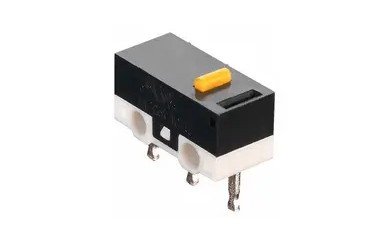
Key features of micro switch:
Snap-action mechanism for fast and clean switching
Available with a wide variety of actuators (lever, roller, button, etc.)
Higher current and voltage ratings compared to tactile switches
Excellent durability and long mechanical life
High precision micro switch
Key differences between tactile - detector and micro switch
Feature |
Tactile Switch |
Micro Switch |
Detector Switch |
Actuation Method |
Metallic dome |
Snap-action mechanism |
Position/movement triggered |
Current Rating |
Low 50 mA ~ 100 mA |
Medium to High 1A – 5A or higher |
Low to Medium 100 mA ~ 500 mA |
Feedback |
Strong tactile click |
Audible and tactile click |
Usually none |
Durability |
Typical from 100K (low-cost) to 10M cycles (high performance like MEC switches) |
Typical from 1M to >10M cycles |
Typical from 100K to 1M cycles |
Customization |
Very high (caps & actuators) |
High (many actuator types) |
Medium |
Typical Applications |
Control panels, consumer devices |
Industrial & safety equipment |
Detection & monitoring systems |
💡 Good to know:
Tactile, micro, and detector switches may look similar in size, but each is designed for a very different function: user input, power switching, or position detection.
How to choose the right switch for your application?
Selecting the right switch depends on your specific application, electrical requirements, and the function you need to perform:
Tactile Switches are ideal for compact user interfaces and control panels. They are perfect for consumer electronics, keyboards, medical devices, and custom control panels because they offer:
Small footprint (SMT or THT)
Good tactile feedback switch for the user
Low cost
Moderate life expectancy acceptable for human interaction
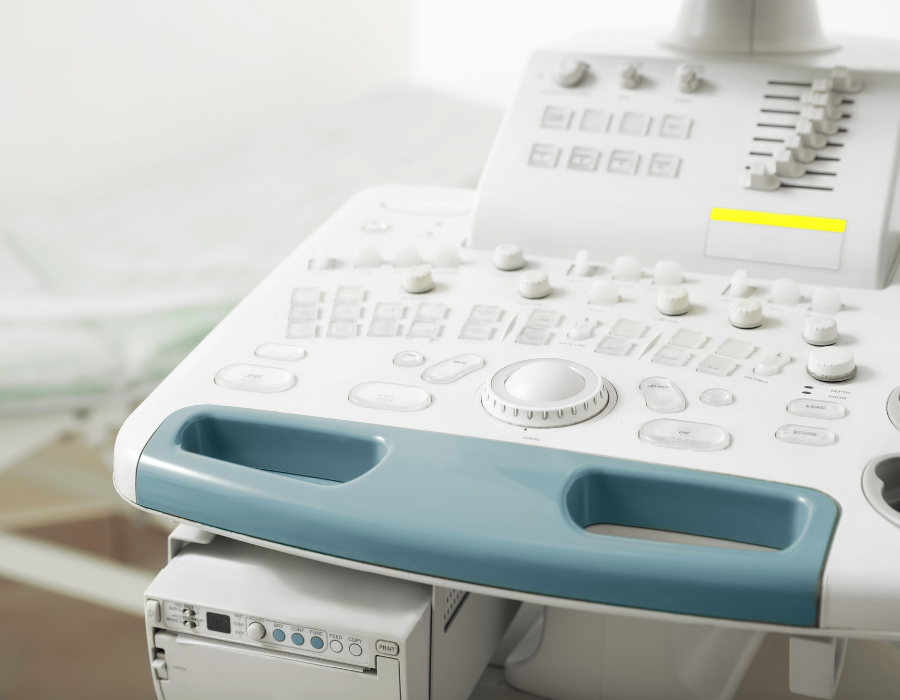
Micro Switches: with their snap-action mechanism and ability to handle higher currents, they excel in industrial equipment, safety systems, home appliances, vending machines and automotive & transportation.
These switches are the perfect choice for high-reliability and demanding applications with:
Fast, snap action switch
High mechanical endurance
Can switch higher currents and voltages
Very reliable point-of-actuation

Detector Switches are designed specifically for position and presence detection. They are the right option when you need to sense the movement, presence, or status of an object, such as in automation systems, printers, vending machines, door monitoring, automotive electronics and robotics.
Their main characteristics:
Very compact
Low actuation force
Designed for frequent, automatic actuation
Cost-effective sensing solution
Source: APEM – original manufacturer article
This article is based on the manufacturer’s original technical article.